

Is the regime in Iran soon to be toast?
- Thread starter Sybertiger
- Start date
You are using an out of date browser. It may not display this or other websites correctly.
You should upgrade or use an alternative browser.
You should upgrade or use an alternative browser.


bigredfish
Known around here
bigredfish
Known around here
US and Israel arming and urging the Kurds to attack Iran… so we’re looking at 10 year insurgent funded by us again? CIA must be in charge now…


bigredfish
Known around here
I think we’re being played….. again
Sounds like a good cop/bad cop routine..
Or is it just sheer incompetence?
Sounds like a good cop/bad cop routine..
Or is it just sheer incompetence?
bigredfish
Known around here

Oceanslider
Known around here
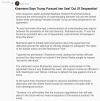
Or….
He is partially correct. The majority of the world hates the USA as well. Donnie has pissed off all of our allies.
When the only real ally you have left is the country everyone hates more than you, even Donnie has to wake up and go, hmmmmmm... maybe I really screwed up.

mat200
IPCT Contributor
- Jan 17, 2017
- 19,233
- 32,159
USA Epic Failure ..
Trump’s 14 Points: Peace Deal or Epic Fail?
Hoover Institution
Jun 18, 2026 The GoodFellows | Conversations on Economics, History & Geopolitics
Is the MOU between the US and Iran “peace for our time”, or merely a matter of time before the deal unravels given its unresolved differences? With America’s midterm election approaching, is this it for the Trump administration’s overseas adventurism, or are the next moves brokering a truce in Eastern Europe and liberating Cuba? And, 250 years after the Redcoats skipped town, Boston deals with a different kind of occupying force – a soccer-mad Scottish “Tartan Army” in search of World Cup glory and a pub-crawling good time
This episode of GoodFellows, broadcast on June 17, 2026, features a discussion between Bill Whalen, Sir Neil Ferguson, John Cochran, and Lieutenant General H.R. McMaster regarding the Trump administration's recent 14-point memorandum of understanding (MOU) with Iran, as well as broader geopolitical implications involving Ukraine, Cuba, and international sports culture.
Trump’s 14 Points: Peace Deal or Epic Fail?
Hoover Institution
Jun 18, 2026 The GoodFellows | Conversations on Economics, History & Geopolitics
Is the MOU between the US and Iran “peace for our time”, or merely a matter of time before the deal unravels given its unresolved differences? With America’s midterm election approaching, is this it for the Trump administration’s overseas adventurism, or are the next moves brokering a truce in Eastern Europe and liberating Cuba? And, 250 years after the Redcoats skipped town, Boston deals with a different kind of occupying force – a soccer-mad Scottish “Tartan Army” in search of World Cup glory and a pub-crawling good time
This episode of GoodFellows, broadcast on June 17, 2026, features a discussion between Bill Whalen, Sir Neil Ferguson, John Cochran, and Lieutenant General H.R. McMaster regarding the Trump administration's recent 14-point memorandum of understanding (MOU) with Iran, as well as broader geopolitical implications involving Ukraine, Cuba, and international sports culture.
Key Discussions:
- The U.S.-Iran MOU (1:24 - 23:30): The panel provides a critical analysis of the 14-point deal, largely characterizing it as a potential disaster or "memorandum of incomprehension." The participants argue the deal was primarily designed to reopen the Strait of Hormuz and potentially delay nuclear issues, but note concerns about the lack of mention of Israel, the asymmetrical nature of the agreement, and the infusion of cash to the Iranian regime. The panelists express skepticism that the agreement will lead to a lasting peace, viewing it as a stopgap measure until after the U.S. midterm elections.
- The Conflict in Ukraine (24:43 - 36:20): The conversation shifts to the war in Ukraine, noting a significant shift in dynamics. The panel observes that Ukraine has been gaining an advantage, striking into the Russian heartland and effectively degrading Russian military and economic capabilities. They discuss the strategic lessons of the conflict, emphasizing the importance of human organization, leadership, and the failure of Russia's military corruption.
- Future of Cuba (36:21 - 40:19): Regarding Cuba, the panel discusses the U.S. economic pressure on the island. They hypothesize that the Cuban regime is on the decline and may be replaced by a more compliant successor, though they remain cautious about the quality of the transition and the potential for new forms of oppression.
- Soccer and the 'Tartan Army' (40:20 - 46:57): The show concludes with a lighter segment on the Scottish "Tartan Army" in Boston for the World Cup. Neil Ferguson shares his perspective on the passion of Scottish soccer fans, the "pain" of supporting a team, and jokingly contrasts European football culture with American sports.

Jimmyjames
Pulling my weight
Cam talk isn’t even a heavily charged political forum and it seems like we all see it the same way.
bigredfish
Known around here
bigredfish
Known around here
mat200
IPCT Contributor
- Jan 17, 2017
- 19,233
- 32,159
Yes, and yet ..
If the USA were to get into battle vs Iran, this was a time Iran was weakest with significant hits on Iran's Proxies,
Iran's supporter Russia exhausted in their "3 day special military operation",
China having numerous issues due to their economic situation,
Syria Iran's former ally no longer an Ally ..
Bottomline, USA failed big time here .. and we should do an after action report.
In theory this should be a turning point in US politics and the Democrats should win the next Presidential election.
Good news, both Russia and the USA failed to take out smaller non-nuclear opponents .. China should see that it has no chance to have a successful win vs Taiwan if Taiwan has the will power and decent defensive military of Ukraine or Iran
mat200
IPCT Contributor
- Jan 17, 2017
- 19,233
- 32,159
mat200
IPCT Contributor
- Jan 17, 2017
- 19,233
- 32,159
Yes, looks like a big L for the USA from what I can see ..
Tony Soprano inspired .. it would terrible if an accident would happen to your ship
Iran, IRGC Insurance required of ships passing through the Straight of Hormuz ..
Iran’s New "Insurance" Rule: Controlling the Strait of Hormuz
What's Going on With Shipping?
Jun 19, 2026 What's Going on With Shipping - Maritime Industry Today
In this episode of What's Going On with Shipping, Sal Mercogliano breaks down the latest—and perhaps most bizarre—development in the Strait of Hormuz. Despite the recent Memorandum of Understanding (MOU) between the U.S. and Iran, the "opening" of the Strait has come with a major catch.
Iran has established the Persian Gulf Strait Authority (PGSA), run by the IRGC, which now requires all commercial vessels to apply for a passage permit and carry Iranian-approved ship insurance. Sal analyzes the new four-page memorandum from the PGSA, exploring the mandatory routes, the liability waivers ship masters must sign, and the surreal nature of being forced to buy insurance from the very group that has historically harassed and seized vessels in these waters.
Topics covered:
 The details of the U.S.-Iran MOU and the lifting of the naval blockade.
The surge of Iranian crude oil exports following the agreement.
A deep dive into the PGSA’s new permit application and mandatory insurance policy.
Analysis of the confirmed mine locations and the recommended southern Omani transit route.
Why this "free" insurance might be the start of a dangerous new precedent for global shipping.
This video, hosted by Sal Mercogliano, examines the complex and contentious state of the Strait of Hormuz following a recent Memorandum of Understanding (MOU) between the United States and Iran (0:00 - 1:43).
Key developments discussed include:
Tony Soprano inspired .. it would terrible if an accident would happen to your ship
Iran, IRGC Insurance required of ships passing through the Straight of Hormuz ..
Iran’s New "Insurance" Rule: Controlling the Strait of Hormuz
What's Going on With Shipping?
Jun 19, 2026 What's Going on With Shipping - Maritime Industry Today
In this episode of What's Going On with Shipping, Sal Mercogliano breaks down the latest—and perhaps most bizarre—development in the Strait of Hormuz. Despite the recent Memorandum of Understanding (MOU) between the U.S. and Iran, the "opening" of the Strait has come with a major catch.
Iran has established the Persian Gulf Strait Authority (PGSA), run by the IRGC, which now requires all commercial vessels to apply for a passage permit and carry Iranian-approved ship insurance. Sal analyzes the new four-page memorandum from the PGSA, exploring the mandatory routes, the liability waivers ship masters must sign, and the surreal nature of being forced to buy insurance from the very group that has historically harassed and seized vessels in these waters.
Topics covered:
The details of the U.S.-Iran MOU and the lifting of the naval blockade.The surge of Iranian crude oil exports following the agreement.A deep dive into the PGSA’s new permit application and mandatory insurance policy.Analysis of the confirmed mine locations and the recommended southern Omani transit route.Why this "free" insurance might be the start of a dangerous new precedent for global shipping.This video, hosted by Sal Mercogliano, examines the complex and contentious state of the Strait of Hormuz following a recent Memorandum of Understanding (MOU) between the United States and Iran (0:00 - 1:43).
Key developments discussed include:
- The U.S.-Iran MOU: While the agreement aims to end the naval blockade and restore shipping, Mercogliano highlights that the "opening" of the strait is far from simple (1:43 - 5:52).
- The Persian Gulf Strait Authority (PGSA): A newly formed entity under the IRGC that now requires commercial vessels to apply for a passage permit (10:33 - 11:41).
- Mandatory Requirements: To transit, vessels must use specific routes in Iranian territorial waters, provide contact information, and obtain "free" insurance from an Iranian-approved provider (11:41 - 15:48).
- Insurance Concerns: The host critiques the surreal nature of the mandatory insurance policy, which covers perils such as "capture" or "seizure"—actions historically performed by the very group (the IRGC) now requiring the insurance (13:47 - 14:42, 19:16 - 22:38).
- Shipping Security: The video covers the status of the international traffic separation scheme due to mine threats and the use of the southern Omani transit route (6:36 - 10:33).
mat200
IPCT Contributor
- Jan 17, 2017
- 19,233
- 32,159
The US Just Flipped on Key Iran Issues
Preston Stewart
1.07M subscribers
Jun 19, 2026 Talking With Experts
There's a lot to unpack in this Memorandum of Understanding
For context we recorded this at 9am Central on Friday June 19th.
One week ago the US stance was zero nuclear enrichment for Iran, they had to hand over all of their highly enriched uranium and the ballistic missile program had to be destroyed.
Today, President Trump has said that only fair that Iran keeps their missiles, that we’re in no rush to get the highly enriched uranium and future enrichment is ok for civilian purposes.
That is a dramatic change in a very short period of time so if you’re confused, just know that so am I.
To help us unpack what exactly is happening here, we’re joined today by Ambassador Daniel Shapiro.
Dan served as the US Ambassador to Israel from 2011 to 2017, and spent time working in the Pentagon, at the State Department on the National Security Council and Capital Hill.
This video features an interview with Ambassador Daniel Shapiro, who discusses the recent, dramatic shift in United States policy toward Iran following a Memorandum of Understanding (MOU) announced in June 2026. The discussion highlights the following key points:
Preston Stewart
1.07M subscribers
Jun 19, 2026 Talking With Experts
There's a lot to unpack in this Memorandum of Understanding
For context we recorded this at 9am Central on Friday June 19th.
One week ago the US stance was zero nuclear enrichment for Iran, they had to hand over all of their highly enriched uranium and the ballistic missile program had to be destroyed.
Today, President Trump has said that only fair that Iran keeps their missiles, that we’re in no rush to get the highly enriched uranium and future enrichment is ok for civilian purposes.
That is a dramatic change in a very short period of time so if you’re confused, just know that so am I.
To help us unpack what exactly is happening here, we’re joined today by Ambassador Daniel Shapiro.
Dan served as the US Ambassador to Israel from 2011 to 2017, and spent time working in the Pentagon, at the State Department on the National Security Council and Capital Hill.
This video features an interview with Ambassador Daniel Shapiro, who discusses the recent, dramatic shift in United States policy toward Iran following a Memorandum of Understanding (MOU) announced in June 2026. The discussion highlights the following key points:
- Misguided War Objectives: The conflict, initiated last summer, was characterized by poorly defined goals, such as regime change, which were ultimately unachievable (1:46 - 2:05).
- Iran's Leverage: When Iran closed the Strait of Hormuz, they gained significant leverage, forcing the U.S. to seek an off-ramp to address global economic and energy stability (2:07 - 2:47).
- The New Agreement: The current MOU is described as an "extraordinarily weak deal" (2:55). It focuses on phase one: reopening the Strait of Hormuz and ending the blockade of Iranian ports (2:56 - 3:13). Phase two involves potential future negotiations on Iran's nuclear program, though no concrete concessions have been made (3:24 - 4:26).
- Front-loaded Sanctions Relief: The U.S. has agreed to unfreeze tens of billions in Iranian assets and waive oil sanctions before receiving any nuclear concessions, a move attributed to the President's urgency (4:26 - 5:20).
- U.S.-Israel Relations: The partnership is under severe strain due to divergent interests. Israel views Iran as an existential threat and has been critical of the U.S. shift, while the U.S. is prioritizing economic stability (16:36 - 18:42).
- Long-term Strategic Questions: The ambassador notes that the sudden 180-degree shift in policy raises concerns among Middle Eastern allies about the long-term reliability of U.S. security commitments (22:16 - 25:36).
bigredfish
Known around here
Yes, and yet ..
If the USA were to get into battle vs Iran, this was a time Iran was weakest with significant hits on Iran's Proxies,
Iran's supporter Russia exhausted in their "3 day special military operation",
China having numerous issues due to their economic situation,
Syria Iran's former ally no longer an Ally ..
Bottomline, USA failed big time here .. and we should do an after action report.
In theory this should be a turning point in US politics and the Democrats should win the next Presidential election.
Good news, both Russia and the USA failed to take out smaller non-nuclear opponents .. China should see that it has no chance to have a successful win vs Taiwan if Taiwan has the will power and decent defensive military of Ukraine or Iran
Very good point about the major superpowers in today’s battlefield.
Things have changed
Oceanslider
Known around here
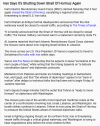
bigredfish
Known around here

bigredfish
Known around here
bigredfish
Known around here
They lie every single time they open their mouth.
This must be why MAGA still supports them.?
This must be why MAGA still supports them.?